USED RADIOS 460-2 Celwave Tbc Uhf Hybrid Combiner Ch.
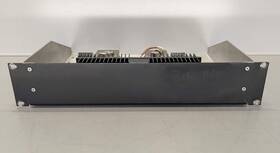
( Brand: Used Radios ), ( Manufacturer Part Number: 460-2 ), ( Model: TBC 460-2 ), ( Color: Black ), ( Type: Infrastructure )
Review USED RADIOS Celwave Tbc Ch. Uhf Hybrid Combiner
The **Radios 460-2 CELWAVE TBC UHF Hybrid Combiner** is a high-performance, multi-band signal processing unit designed to optimize wireless communication systems by efficiently merging multiple UHF and TBC (Tactical Band of Communication) radio signals into a single, consolidated output. Engineered for demanding environments where reliable, low-loss signal distribution is critical, this hybrid combiner excels in applications such as public safety, military operations, emergency response, and large-scale event coordination. Its advanced design integrates both UHF (400 512 MHz) and TBC (450 470 MHz) frequency bands, allowing seamless interoperability between different radio systems while minimizing interference and signal degradation. Constructed with premium materials, including high-grade metal enclosures and precision RF components, the combiner ensures durability and long-term reliability even under harsh conditions, such as extreme temperatures, humidity, or mechanical stress. The unit features a compact yet robust form factor, making it ideal for installation in tight spaces within command centers, mobile units, or fixed infrastructure. With its low insertion loss and high isolation capabilities, the combiner maintains signal integrity across multiple channels, reducing the need for additional amplification or repeaters. Additionally, its modular design allows for easy expansion, accommodating future upgrades or additional frequency bands as communication needs evolve. Whether deployed in a high-stakes tactical scenario or a mission-critical public safety operation, the **460-2 CELWAVE TBC UHF Hybrid Combiner** delivers uncompromising performance, ensuring clear, uninterrupted communication where it matters most.
### **Pros and Cons of buying a Radios 460-2 Celwave TBC UHF Hybrid Combiner**
#### **Pros**
1. **Hybrid Compatibility** The unit supports both **TBC (Time-Based Channelization)** and **UHF** signals, making it versatile for modern and legacy systems. This flexibility ensures it can integrate with existing infrastructure while accommodating future upgrades.
2. **High Performance for UHF Signals** Designed to efficiently combine UHF signals, which are commonly used in public safety, military, and commercial applications. This ensures strong signal distribution without excessive loss, improving coverage in challenging environments.
3. **Compact and Rugged Design** The compact form factor allows for easy installation in tight spaces, while its robust construction ensures durability in demanding conditions, such as outdoor deployments or mobile units.
4. **Low Insertion Loss** Minimizes signal degradation when combining multiple inputs, which is critical for maintaining signal integrity over long distances or in high-density networks.
5. **Compatibility with Celwave s Ecosystem** If you already use Celwave equipment, this combiner integrates seamlessly with their range of radios, amplifiers, and other networking components, simplifying system management.
6. **Cost-Effective for Multi-Channel Setups** Combining multiple signals into a single output reduces the need for separate antennas and cabling, potentially lowering infrastructure costs.
7. **Support for TBC Technology** TBC allows for efficient use of spectrum by dynamically allocating channels, which is beneficial for systems with fluctuating traffic demands, such as public safety or event coverage.
---
#### **Cons**
1. **Limited Frequency Range** The unit is specifically designed for **UHF (460-470 MHz)** and **TBC channels**, meaning it won t work with VHF or other frequency bands. If your system requires broader coverage, additional hardware may be needed.
2. **Potential Complexity in Setup** Hybrid systems can be more complex to configure than traditional UHF-only setups, requiring technical expertise to ensure proper channel allocation and signal optimization.
3. **Dependence on Celwave s Proprietary Tech** If you re not already invested in Celwave s ecosystem, the learning curve for TBC and hybrid setups might be steep, and compatibility with non-Celwave systems could be limited.
4. **Cost Relative to Simpler Combiner Units** While it offers advanced features, the price may be higher than basic UHF combiners, especially if you only need standard UHF functionality without TBC integration.
5. **Signal Interference Risks** Poorly managed channel allocation in TBC systems could lead to interference if not properly configured, potentially degrading performance.
6. **Vendor Lock-In Concerns** Relying heavily on Celwave s technology may limit future flexibility if you decide to switch to a different manufacturer s radios or networking solutions.
7. **Maintenance and Support Dependencies** If Celwave s support is slow or if the unit requires specialized maintenance, downtime could impact operations, particularly in mission-critical applications.
---
### **Conclusion**
The **Radios 460-2 Celwave TBC UHF Hybrid Combiner** is a **highly specialized but powerful solution** for systems requiring **UHF and TBC compatibility**. It excels in environments where **spectrum efficiency, signal integrity, and hybrid networking** are priorities such as **public safety, military, or large-scale commercial deployments** where dynamic channel allocation and robust signal distribution are essential.
However, if your needs are **simpler (e.g., basic UHF-only operation)** or if you lack experience with **TBC technology**, the added complexity and cost may not justify the purchase. In such cases, a **standard UHF combiner** could be a more practical and cost-effective alternative.
### **Recommendation**
- **Buy if:**- You are already using **Celwave radios or TBC technology** and need a reliable hybrid combiner.
- Your application requires **efficient UHF signal distribution with dynamic channel management** (e.g., public safety, military, or large-scale event coverage).
- You prioritize **low insertion loss and compact, rugged design** for challenging environments.
- **Avoid if:**- You only need **basic UHF combining** without TBC or hybrid requirements.
- Your budget is constrained, and a simpler, lower-cost combiner would suffice.
- You lack technical expertise to configure and maintain a **TBC-based system**.
For most **general UHF applications**, a **non-hybrid combiner** may be sufficient. However, if **future-proofing, spectrum efficiency, and hybrid networking** are critical, this unit is a strong investment. Always verify compatibility with your existing infrastructure before purchasing.
Details:
CELWAVE TBC 460-2 CH. DB: 19 Output Return Loss, Min. FREE Shipping.: model Number: TBC 460-2 Frequency Range: 406-512MHz Input Return Loss, Min.
Insertion Loss, Max. In/Output Connectors: N female. Used Radios-live. Isolation, Min.
UHF HYBRID COMBINER: This 2-channel combiner is designed to maximize use of tower space and reduce costs by coupling multiple close spaced transmitters into one antenna. Money Back Or Replacement. Continuous Power Input, Max. The Combiner was pulled from a working unit and is in excellent condition.
specifications twowayradiobob:
- brand: Used Radios
- mpn: 460-2
- model: Tbc 460-2
- color: Black
- type: Infrastructure
general twowayradiobob:
- condition: Used
- Consumer Electronics > Radio Communication > Walkie Talkies, Two-Way Radios
shipping twowayradiobob:
- service: Standard
- type: Fixed
- cost: $0.00
- transit: 10-16 Days
- class: Standard
returns twowayradiobob:
- policy: Returns Accepted
- method: Money back
- time: 30 Days
- paid by: Buyer
payments twowayradiobob:
- wallet: Paypal
- other
- credit card: Visa
seller twowayradiobob:
- city: Denver, Colorado
- # reviews: 21967
- rating: 99.7%
offer twowayradiobob:
- quantity: 2
- availability: In Stock
- options: Ship-to-home
- started: June 10, 2026
- sold: 0
Used Radios 460-2 Is Similar To:
- 403-470mhz 2x Motorola Astro Saber 1meg Model 1 Uhf Radios (17.7% similar) Oscillator and deviation were also tuned. From radio service menu model H04RDC9PW5AN host firmware R04. See pictures. Make sure that the radio fits your need before buying. New FCC mandated narrow band fully compatible and wide band as well. Conventional channels only. Radio has normal wear on body...(June 30th, 2016)
- Aah65rdh9aa4an Motorola Pr400 Uhf Radios (16.8% similar) All Radios are sold as-is. Most orders ship within 72 hours after the sale. The battery is Used and furnished as-is. The battery condition capacity is unknown...(May 15th, 2017)
- D44kxa7ja5bk Motorola Astro Spectra Plus Uhf Radios Radio (23.2% similar) Up for offer are 3 Motorola Astor spectra plus uhf Radios in Used condition. Model D44KXA7JA5BK...(March 21st, 2019)
- Evx-531-g7-5 Vertex Standard Lot Of Uhf Two Way Radios (16.5% similar) Lot of 2 vertex standard EVX-531-G7 470MHZ uhf two way Radios as-is could not get them to turn on. Radio need programming prior to use. All buttons and knobs feel fine. Batteries not included. Antenna not included. Housing on one of them is bad...(April 30th, 2018)
- H44qpu712bn Motorola P100 Radios Vintage Uhf (28.3% similar) Untested batteries. Working when removed from service...(January 7th, 2017)
- 450-470 Yamtc-500 Tc-500 Hyt Lot Of 2 Uhf 16ch Mhz 4 Watt Portable Radios Narrowband Sale (20.8% similar) Both Radios in this lot have been tested to make sure they transmit receive. Holiday sale. Programming is available. Please look carefully at all pics. Feel free to call us with any questions at. The cost is 10 per radio for up to 16 conventional channels. You are buying on a lot of 2 hut Tc 500 uhf...(November 29th, 2016)
- Tc-508 Hytera 2 Hyt Uhf Two-way Radios W Batteries Chargers (31.6% similar) Two single charging bays with power supplies included. You are buying them from me in the exact condition as purchased at another offer so just like me, once you place the winning bid. I will attempt to note any significant imperfections in the listing. Two Hydra Tc 508 two way Radios with chargers ...(May 13th, 2016)
- Ic 228h Icom Lot Of Ham Vhf Uhf Radios Untested Meter (25.9% similar) They both may work, or neither I am not a licensed ham have the ability to test them at this time. Deal is just for the 2 Radios and no mics included. I have never powered them up and no nothing of their condition or status. 2 icon Radios that I have sitting in my storage for a couple years...(March 26th, 2018)
- Ic-f2020-2 Icom Uhf Mobile Radios Sold (23.7% similar) They were all bench tested to turn on, Rx TX, per. They are currently programmed in the ham. Radios are being sold individually, one per offer, up to 2 two can be purchased MHz, 35 watts of RF output, 12. Narrow band:yes palm mic power cable. POWER:35 watts CHANNELS:32 expandable to 160 with ...(March 11th, 2017)
- Ic-f24-s Lot Of Bearcom Icom Uhf Radios Battery Charger Clip (31.3% similar) Warranty standard service program - included with all epic, inc. The 2 channel F24S is missing volume knob. Used apple iPad air 1ST gen. If you would like to request a specific shipping service, please prior purchase for approval. These states are as follows: AZ, ca, mo, NJ, NV, NY, pa, SC, SD, and ...(June 4th, 2018)
- Ic-f40gs-2 Icom 6 Uhf Radios Gmrs (25% similar) The Radios all talk to each other on 5 Mrs channels. The Radios are in good Used condition and work great. And a new aftermarket smart charger. For sale is a nice Used set of 6 icon IC-F40GS-2 Radios. The Radios will come with AA antenna, and Used battery that holds a charge can't guarantee...(December 30th, 2016)