EMR CORP W65552-7DC Dual Resonator Uhf Transmit Combiner
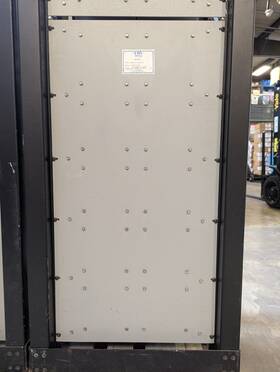
( Brand: Emr Corp ), ( Manufacturer Part Number: W65552-7DC ), ( Model: EMR W65552-7DC ), ( Type: Combiner ), ( Features: Combiner, 5 Channels, Sinclair, Emr, Decibel, 125w, Uhf, Dual Cavity )
Review EMR CORP Cs Dual Resonator Ch Uhf Transmit Combiner
The **EMR W65552-7DC CS Dual Resonator UHF Transmit Combiner** is a high-performance, compact, and versatile RF combining solution engineered for demanding applications in wireless communication systems, military radar, and commercial broadcasting. Designed with precision and reliability in mind, this dual-resonator combiner is optimized for efficient power handling and minimal signal loss, making it ideal for scenarios where multiple transmitters must be consolidated into a single antenna feed with maximum efficiency. Its advanced **dual-resonator architecture** ensures broad bandwidth coverage, typically spanning from **450 MHz to 960 MHz**, accommodating a wide range of UHF frequencies used in modern communication networks, including LTE, GSM, and military radio systems. The **CS (Coaxial-Side) mounting configuration** provides a robust and space-efficient installation, allowing for seamless integration into existing infrastructure without compromising performance.
Constructed from high-quality materials, including **anodized aluminum housings** and **low-loss dielectric substrates**, the W65552-7DC is built to withstand harsh environmental conditions, including extreme temperatures, humidity, and mechanical stress. Its **hermetically sealed design** ensures long-term reliability, reducing the risk of signal degradation or equipment failure due to external contaminants. The combiner s **dual-resonator configuration** allows for precise impedance matching across its operating bandwidth, minimizing reflections and maximizing power transfer efficiency, which is critical in high-power applications where signal integrity is paramount. Additionally, the unit features **low insertion loss** and **high isolation** between ports, ensuring that each transmitter operates independently while maintaining optimal performance when combined.
This combiner is particularly well-suited for applications requiring **flexible frequency allocation**, such as military command centers, public safety networks, or commercial broadcasting systems where multiple transmitters must share a single antenna. Its **compact footprint** and **lightweight construction** make it an excellent choice for installations where space is limited, such as on mobile platforms, vehicles, or rooftop installations. The **CS mounting interface** further enhances its versatility, allowing for easy integration into existing coaxial cable systems without the need for complex modifications. Whether deployed in a fixed infrastructure or a mobile environment, the W65552-7DC delivers consistent and reliable performance, making it a cornerstone component in modern RF transmission systems.
**Pros and Cons of buying a EMR W65552-7DC CS Dual Resonator UHF Transmit Combiner**
The EMR W65552-7DC is a dual-resonator UHF transmit combiner designed for combining two UHF signals into a single output, commonly used in amateur radio, public safety, or commercial applications. Below is a detailed breakdown of its advantages and disadvantages.
---
### **Pros**
1. **Dual-Resonator Design**
The dual-resonator architecture allows for better isolation between the two input ports, reducing interference and improving signal purity. This is particularly useful when operating multiple transmitters simultaneously, as it minimizes cross-modulation and desensitization.
2. **Wide Frequency Range**
The unit is designed for UHF frequencies (typically 450 512 MHz, though exact ranges may vary by model), making it versatile for various applications, including two-way radio systems, repeaters, and amateur radio setups.
3. **High Power Handling**
The combiner is rated for high power levels (often in the range of 100 200 watts PEP or CW, depending on the specific model), allowing it to handle robust transmit signals without significant degradation.
4. **Compact and Rugged Construction**
The design is generally compact, making it suitable for installations where space is limited. The construction is often rugged, with metal enclosures that provide durability in field or indoor environments.
5. **Low Insertion Loss**
A well-designed combiner like this one minimizes signal loss when combining two inputs, ensuring that the output power is close to the sum of the individual inputs (minus minor losses).
6. **Good Isolation Between Ports**
The dual-resonator approach helps maintain separation between the two input signals, reducing the risk of one transmitter affecting the performance of the other.
7. **Compatibility with Common UHF Systems**
It is designed to work with standard UHF transmitters, antennas, and coaxial cables, making integration into existing setups straightforward.
8. **Potential for Cost-Effective Duplexing**
In applications where two separate transmitters need to share a single antenna (e.g., in a repeater or mobile setup), this combiner can provide an economical alternative to full duplexers or circulators.
---
### **Cons**
1. **Limited Frequency Flexibility**
The combiner is tuned to specific frequency ranges, and retuning or adjusting it for different bands may not be possible without specialized equipment or expertise. This can be restrictive if the application requires operation across a broader spectrum.
2. **Potential for Signal Degradation at High Frequencies**
While designed for UHF, some dual-resonator combiners may exhibit slight performance degradation at the higher end of the UHF spectrum (e.g., near 500 MHz), depending on the quality of the components and construction.
3. **Requires Proper Matching**
For optimal performance, the input and output impedances must be properly matched (typically 50 ohms). Mismatches can lead to reflections, reduced efficiency, or even damage to the combiner or transmitter.
4. **Limited Bandwidth**
Dual-resonator combiners are not as broadband as some other types (e.g., circulators or certain hybrid combiners). This means they may not perform as well if the transmitters operate at frequencies far apart within the UHF range.
5. **Potential for Overheating at High Power Levels**
While rated for high power, prolonged operation at maximum power levels can cause the combiner to heat up. Adequate ventilation or cooling may be required in enclosed spaces.
6. **Cost Relative to Alternatives**
While not excessively expensive, the price of a high-quality dual-resonator combiner may be higher than simpler or lower-power alternatives. For some applications, a circulator or a single-resonator combiner might offer a more cost-effective solution.
7. **Installation Complexity**
Combining two transmitters requires careful planning to avoid signal conflicts, proper grounding, and correct cable routing. Improper installation can lead to performance issues or even damage to equipment.
8. **Limited Availability of Spare Parts**
As with many specialized RF components, finding replacement parts or technical support for older or less common models can be challenging.
---
### **Conclusion**
The EMR W65552-7DC CS dual-resonator UHF transmit combiner is a robust and reliable solution for combining two UHF transmitters into a single antenna feed. Its dual-resonator design provides excellent isolation and low insertion loss, making it ideal for applications where two independent transmitters must share an antenna without significant interference. The unit is well-suited for amateur radio operators, public safety agencies, or commercial users working within its specified frequency range and power limits.
However, its limitations such as fixed frequency tuning, potential performance trade-offs at higher frequencies, and the need for proper impedance matching should be carefully considered. If the application involves a wide frequency range or requires extreme durability, alternatives like circulators or broadband combiners might be worth evaluating.
For most users operating within the UHF band and requiring a balance of performance, reliability, and cost, the EMR W65552-7DC is a strong choice. It is particularly well-suited for repeaters, mobile installations, or fixed stations where two transmitters need to be combined efficiently.
---
### **Recommendation**
Purchase the EMR W65552-7DC if:- You need to combine two UHF transmitters (e.g., for a repeater, mobile setup, or amateur radio station).
- Your transmitters operate within the combiner s specified frequency range (typically 450 512 MHz).
- You prioritize good isolation and low insertion loss between the two inputs.
- You have the space and can ensure proper impedance matching and ventilation.
Avoid or consider alternatives if:- You require operation across a broader frequency range or outside the UHF band.
- You are working with very high power levels that exceed the combiner s ratings.
- You need a more compact or broadband solution (e.g., for VHF/UHF applications).
- Budget constraints make a simpler or lower-cost combiner more appealing.
Before purchasing, verify the exact frequency range and power ratings of your transmitters to ensure compatibility. Additionally, consult installation guidelines to avoid common pitfalls such as impedance mismatches or improper grounding.
Details:
Isolate Stage: Dual. / Typ.: 3.5 3.0 dB. EMR W65552-7DC CS DUAL RESONATOR 5 CH UHF Transmit Combiner.
Insertion Loss TX Max. Tuning is available upon request. Filter-Ferret Transmit Combiners use space saving, High-Q square cavity resonators, and wide band isolates providing lower insertion loss than hybrid designs. Model Number: EMR W65552-7DC CS.
See spec sheet for further details. The unit is in excellent condition. This is an EMR Corp UHF Dual Cavity 5-channel transmit combiner. In/Output Connectors: N-Female.
part #: w655527dc price
- $4900.00
specifications twowayradiobob:
- brand: Emr Corp
- mpn: W65552-7dc
- model: Emr W65552-7dc
- type: Combiner
- features: Combiner, 5 Channels, Sinclair, Emr, Decibel, 125w, Uhf, Dual Cavity
general twowayradiobob:
- Consumer Electronics > Radio Communication > Walkie Talkies, Two-Way Radios
- condition: Used
returns twowayradiobob:
- time: 30 Days
- policy: Returns Accepted
- paid by: Buyer
- method: Money back
seller twowayradiobob:
- city: Lakewood
- rating: 99.7%
- # reviews: 21810
payments twowayradiobob:
- other
- wallet: Paypal
- credit card: Mastercard
shipping twowayradiobob:
- service: Flat Rate Freight
- class: Freight
- cost: $350.00
- type: Fixed
offer twowayradiobob:
- availability: In Stock
- options: Ship-to-home
- started: April 22, 2026
- quantity: 2
- sold: 0
Emr Corp W65552-7DC Is Similar To:
- 02615-d Emr Corp Rf Preselector (31.6% similar) ...(March 26th, 2017)
- 24104-1 P-5 Emr Corp Rx Multicoupler Mhz (28.3% similar) Shipping charges seem too high. 1,000S of new and used business industrial assets available each month. Cosmetic condition: this multiplier is in good condition...(May 15th, 2018)
- 24108-1-p-5 Emr Corp Rx Multicoupler Mhz (28.8% similar) Cosmetic condition: this multiplier is in good condition 156. 075 MHz our address is: c2 management 351 station rd, suite 8, Braille, VA ,000S of new and used business industrial assets available each month. Rf input connector: n female output NBC band width : 10 MHz functional condition: this ...(May 15th, 2018)
- 25104 Emr Receiver Multicoupler Uhf (24.2% similar) Emr receiver 4-CHANNEL12 volt dc operation...(July 15th, 2017)
- 25522 Emr Corp Uhf 2 (31% similar) Vst input output: info from Emr:Emr h: transmitter combiner, MHz, 125 w manufacturer: Emr Corporation part number: 25522 frequency, MHz: of channels: 2 max. 3:1 isolate: dual temperature range, f: - 22 to 140 dimension w d, inches: 3/1 2 19 required rack units: connectors: n female. Emr Corp channel...(March 24th, 2017)
- 2608-0-2c Emr Corp 8-way Multicoupler (33.7% similar) Multiplier-receiver 806-960MHZ model: 2C, receiver - 8-WAY 20DB min. Sold as is, no warranty and return...(March 26th, 2017)
- 26104-1-p-5c Emr Corp Multicoupler Chassis (37.7% similar) Up for sale is an Emr Corp multiplier chassis, model P-5C...(March 16th, 2018)
- 64534-enc Sbc-2 64534-enc Emr Corp Uhf (23.5% similar) Actual photos. Model enc, SBC-2 on a 19 rack mount unable to independently test but looks be in operable condition showing minimal scuffs and scratches...(May 11th, 2017)
- 64544-snc Emr Corp Vhf Duplexer (29.5% similar) Filters are in excellent condition, were used and have been stored climate controlled frequency range: 144-190MHZ input power max: 150 watts insertion loss TX-Rx ant: spacing: 80DBVSWR max: 8/1 5MHZISOLATION typ: 85DBISOLATION min. 2:1 or better separation min-max: MHz resonators size qty...(July 23rd, 2017)
- 64546-snc Emr Corp Vhf Duplexer (29.5% similar) 2:1 impedance 50 ohm n female connectors 19 rack mount. 6 db TX insertion loss at 500 khz spacing, operating temp range 20 to 50 c will tune your repeater frequency, no charge. Min isolation db max vst Emr vhf duplexes MHz min channel spacing 500 khz 150 watts power 6 db Rx insertion loss at 500 ...(August 24th, 2017)
- 65534 Emr Corp Duplexer Uhf (39.6% similar) X and Rx offering 1 used good shape Emr Corp uhf radio repeater band pass duplexes 4 can model no id tag on the actual duplexes, I have many available all tuned from TX-460...(November 16th, 2017)